
Spotlight on stylometric text analysis - The WW2 Years

It has long been speculated that some stories with "Mandrake" and "The Phantom" may have been written by a ghost writer during Lee Falk's military service. And that the ghost writer could be Alfred Bester.
This article takes a deeper dive into the issue by seeing whether stylometric analysis can provide some answers.
Same character - two different authors
The Starman Corpus
These stories were published in the "Adventure Comics" 1938 series by DC Publication. In the issues 65-80 (Aug 1941 to Nov 1942)
Starman-AC_065: "The Mystery of the Undersea Terror", Starman-AC_066: "The Case of the Camera Curse", Starman-AC_067: "The Menace of the Invisible Raiders", Starman-AC_068: "The Blaze of Doom", Starman-AC_069: "Adventure of the Singapore Stranglers", Starman-AC_070: "Adventure of the Ring of Hijackers". Starman-AC_071: "The Invaders from the Future", Starman-AC_072: "The Case of the Magic Bloodstone", Starman-AC_073: "The Case of the Murders in Outer Space", Starman-AC_074: "The Case of the Monstrous Animal-Men", Starman-AC_075: "The Strange Case of the Luckless Liars", Starman-AC_076: "(The Case of the Sinister Sun)", Starman-AC_077: "Finder's Keepers", Starman-AC_078: "The Little Man who wasn't There", Starman-AC_079: "The Tune of Terrific Toby", Starman-AC_080: "The Time-Machine Crime".
AT GCD issues 67, 68, 78, 79 and 80 are credited Alfred Bester while the others are credited Gardner Fox.
Analysis
The goal of the analyses of the Starman stories is to investigate whether there are features that indicate the likelihood of who wrote which stories.
ChatGPT - 4o
Overall Overview: Authorship Analysis
The stories were uploaded to chatgtp. It was written that Gardner Fox was the author of most of the stories but that there was also an unknown author on some of them. Could the theme and language suggest something about which stories were written by whom?
| issue | GCD | chatgtp - author? | chatgtp - comment |
|---|---|---|---|
| 65 | Fox | Fox | Technological threat from the sea, classic Fox. |
| 66 | Fox | outside Fox | Occult and voodoo theme, little science. |
| 67 | Bester | Fox | Inviso solution, FBI collaboration – familiar Fox element. |
| 68 | Bester | Fox | Patriotic and technical, typical Fox. |
| 69 | Fox | Fox | War, sabotage, Asian setting – Fox theme. |
| 70 | Fox | Fox | Good mix of railway drama and sabotage. |
| 71 | Fox | Fox | Time travel and technology, familiar Fox plot. |
| 72 | Fox | outside Fox | Supernatural/mythological story, weaker logic. |
| 73 | Fox | Fox | Very technical (rocket trajectories + law!), strong Fox style. |
| 74 | Fox | doubtful/Fox | Animalization machine is borderline Fox – parodic. |
| 75 | Fox | Fox | Hypnosis, crime and rational explanation of supernatural. |
| 76 | Fox | Fox | Solar fantasy with explained planet enemies, classic Fox. |
| 77 | Fox | Fox | Ghost character (The Mist), familiar from Fox’s Starman writing. |
| 78 | Bester | outside Fox | More like parody, Scooby Doo-like structure, Children + comedy. |
| 79 | Bester | outside Fox | Humor and parody. Very uncharacteristic for Fox. |
| 80 | Bester | Fox | Shakespeare and time machine, rational logic and heavy Fox feel. |
Gardner Fox's stylistic features
Based on analysis of Fox-proof stories (#65, 67–71, 73, 75–77, 80):
Linguistic tone: Combines serious, technical prose with dry one-liners and patriotic comments.
Science and explanation: Fox always attempts to provide a technical explanation (even if it is pseudoscientific) – as in the time machine, rocket launchers (#73), invisibility solution (#67, 77) and rays (#76).
Starman role: Ted Knight appears as a heroic but weak social figure, who is activated through "summons". The internal conflict (playboy vs. hero) is Fox's work.
Narrative moves:
Stories often start with news reports or a public threat.
Starman is informed through Woodley Allen or radioactive signals.
Stories often end with a moral lesson or logical explanation.
Stories with a possible different author
The following stories break with the Fox style in several areas:
issue 66 – "Camera Curse": Focuses on magic cameras, voodoo, mystical powers – no technology.
issue 72 – "Magic Bloodstone": Uses Arabic mysticism and magic stones as a propulsion – very pulp-like.
issue 78 – "Little Man who wasn’t there": Scooby Doo-like comedy with a child sidekick (“Mike Muggins”), very little of Fox’s technical or logical approach.
issue 79 – "Tune of Terrific Toby": A sort of morality fable with heavy use of slapstick and self-deception – this is more of a social comedy than a superhero story.
Statistical Stylometry
A more specific query against stylometric features in Fox stories versus non-Fox stories confirms the findings in the first analysis.
Average Sentence Length
The sentences are on average shorter in stories attributed to Gardner Fox than with those by other suspected authors.
Average word length
Fox stories tend to use somewhat longer words.
This indicates a somewhat higher level of abstraction and explanatory language, typical of Fox's technical and explanatory style.
Type-token ratio (linguistic variation)
Fox stories clearly show higher lexical variation.
This suggests a more varied and precise use of words – consistent with Fox's habit of scientific terminology and differentiated narrative voice.
Total number of words per story
Fox stories tend to be somewhat longer, but not extremely so.
This may indicate that he emphasized developing plot and explanation rather than just action.
Technology frequency: Fox vs. Others
Fox stories have a significantly higher incidence of technological terms.
This is in line with Fox’s well-known interest in explaining Starman’s powers and enemies’ devices via pseudoscientific logic.
Non-Fox stories use technology less or only as a backdrop, not as a motor in the plot.
Modal verbs (must, should, might, etc.)
Fox stories have a higher use of modal expressions.
This suggests that the characters in Fox’s stories more often express logic, duty and possibility – e.g. "I must act fast!" or "He could be dangerous!"
This fits with Fox's analytical and explanatory writing style.
Action verbs (hit, run, fly, etc.)
Here the difference is more even.
Both Fox and the other authors use high-frequency action verbs, but there is a slight tendency for other authors to use even more physical drama.
This may indicate that non-Fox stories place a greater emphasis on visual comedy and exaggerated physical conflict.
Exclamations (wow, yow, ugh, etc.)
The non-Fox stories use far more exclamations.
This points towards a more cartoonish-parodic or "pulp comic" tone - as in the stories with "Terrific Toby" and "Little Man Who Wasn't There".
Fox's style is generally more controlled and matter-of-fact, even in exaggerated situations.
-
 Average sentence length
 -
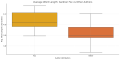 Average word lenght
 -
 Type-Token ratio
 -
 Word count per story
 -
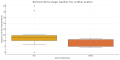 Technical terms usage
 -
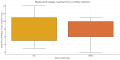 Modal verb usage
 -
 Action verb usage
 -
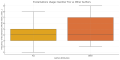 Exclamations usage


PCA
Asking chatgtp to make a PCA analysis of the Starman corpus to visualize a 2D view of stylistic differences between the stories.
The PDA figure shows that the assumed Fox stories form a clear cluster on the left – with a relatively consistent stylistic signature. The non-Fox stories, assumed by Bester, (#66, #72, #78, #79, and partly #74) lie further out, especially #78 and #79, which stand out as linguistically and thematically different (distinctly humorous/parodic). Story #74 (“Animal-Men”) is close to the Fox cluster, which is consistent with the assessment of borderline case.
-
 PCA
PCA

Summary
Total number of stories analyzed by ChatGPT: 16 (AC #65–#80). Strongly indicated Gardner Fox: 11 stories. Probably written by another author, Alfred Bester, issues 66, 72, 74*, 78, 79. Note that #74 is a borderline case, and may be a collaborative project or a careful experimentation by Fox himself.
ChatGPT's analysis of the presumed author for the stories differs from who is credited on GCD for six of the stories, something that should be investigated further.
| issue | title | GCD - author | chatgtp - author | chatgtp - comment |
|---|---|---|---|---|
| 66 | "The Case of the Camera Curse" | Fox | outside Fox | Occult and voodoo theme, little science. |
| 67 | "The Menace of the Invisible Raiders" | Bester | Fox | Inviso solution, FBI collaboration – familiar Fox element. |
| 68 | "The Blaze of Doom" | Bester | Fox | Patriotic and technical, typical Fox. |
| 72 | "The Case of the Magic Bloodstone" | Fox | outside Fox | Supernatural/mythological story, weaker logic. |
| 74 | "The Case of the Monstrous Animal-Men" | Fox | doubtful/Fox | Animalization machine is borderline Fox – parodic. |
| 80 | "The Time-Machine Crime" | Bester | Fox | Shakespeare and time machine, rational logic and heavy Fox feel. |
Note: Most of these analyses and several others have been pre-analyzed using the 'stylo' package in RStudio and Voyant Tools. Those that were not analyzed with these two tools are post-tested in analyses with these two tools. Analyses using the 'stylo' package in RStudio and Voyant Tools are consistent with the findings in the analyses using ChatGPT.
A somewhat strange coincidence is that in the "The Time-Machine Crime" story (Adventure Comics 080, November 1942) the villains use a time machine to kidnap William Shakespeare. They trick him into helping with the plan to rob the wealthy audience during a performance at the Cambridge Summer Theatre. A theatre co-sponsored by John Huntington and Lee Falk at that time. The theater staged Shakespeare's "Othello" the week of August 10, 1942, and it is reasonable to believe that the story of "The Time-Machine Crime" was inspired by this production. Perhaps the author of "The Time-Machine Crime" was in the audience at one of the performances? If this was Bester, it could strengthen the hypothesis that Bester was the ghost-writer behind some of the Mandrake or the Phantom stories in the WW2 period.
Mandrake and the Phantom
There are anecdotes that mention something about Alfred Bester being a ghostwriter for some Mandrake and the Phantom stories, while Lee Falk was in the army. And there are several who have tried to identify which stories these could be.
In the years 1942 and 1943, Lee Falk was Chief of Radio of the Foreign-Language Division OFF/OWI. And in the years 1944 and 1945 he was a private in the army, according to him, in the signal corps. To visualize these two time periods, two timelines can be set up:
Timeline 1942-1943: Mandrake the Magician and The Phantom Stories
| 1942 | 1943 | |||||||||||||||||||||||||||||||||||||||||||||||||
|---|---|---|---|---|---|---|---|---|---|---|---|---|---|---|---|---|---|---|---|---|---|---|---|---|---|---|---|---|---|---|---|---|---|---|---|---|---|---|---|---|---|---|---|---|---|---|---|---|---|---|
| Jan | Feb | Mar | Apr | May | Jun | Jul | Aug | Sep | Oct | Nov | Dec | Jan | Feb | Mar | Apr | May | Jun | Jul | Aug | Sep | Oct | Nov | Dec | |||||||||||||||||||||||||||
| MD | Lothar the Champ | The Rumor Factory | Baron Kord | The Witch of Kaloon | The Earthshaker | |||||||||||||||||||||||||||||||||||||||||||||
| MS | The Hungry Isles | Pacifica | Mystery of the Girls with Red Hair | Cloud City | Gloria Golden | |||||||||||||||||||||||||||||||||||||||||||||
| PD | The Inexorables | Bent Beak Broder | The Phantom's Engagement | High Seas Highjacker | ||||||||||||||||||||||||||||||||||||||||||||||
| PS | The Impostor | Castle in the Clouds | The Ismani Cannibals | Hamid the Terrible | ||||||||||||||||||||||||||||||||||||||||||||||
| Lee Falk | Chief of Radio of the Foreign-Language Division OFF/OWI | writing | ||||||||||||||||||||||||||||||||||||||||||||||||
Timeline 1944-1945: Mandrake the Magician and The Phantom Stories
| 1944 | 1945 | |||||||||||||||||||||||||||||||||||||||||||||||
|---|---|---|---|---|---|---|---|---|---|---|---|---|---|---|---|---|---|---|---|---|---|---|---|---|---|---|---|---|---|---|---|---|---|---|---|---|---|---|---|---|---|---|---|---|---|---|---|---|
| Jan | Feb | Mar | Apr | May | Jun | Jul | Aug | Sep | Oct | Nov | Dec | Jan | Feb | Mar | Apr | May | Jun | Jul | Aug | Sep | Oct | Nov | Dec | |||||||||||||||||||||||||
| MD | The Dome | Doctor Congo | The Mirror People | The Ice Lady | The Old Ones | The Mysterious Prince | The Sleeping Beauty | |||||||||||||||||||||||||||||||||||||||||
| MS | The Garden of Wuzzu | The Circus Adventure | The Santa Claus Pirates | Fountain of Youth | Kingdom of the Wind | The Atalan Deep | The Twins of Karana | |||||||||||||||||||||||||||||||||||||||||
| PD | Diana | The Crooner | The Maharajah's Daughter | The Blue Gang | Lago the Lake God | The Wild Girl | The Mermaids of Melo Straits | |||||||||||||||||||||||||||||||||||||||||
| PS | Hamid the Terrible | The Childhood of the Phantom | The Golden Princess | The Strange Fisherman | ||||||||||||||||||||||||||||||||||||||||||||
| Lee Falk | writing | Fort Devens and other Army Training Camps | ?? | |||||||||||||||||||||||||||||||||||||||||||||
An anecdote by Bester tells of a meeting with Lee Falk. In this, Bester mentions that he ghost-wrote for Falk. He also mentions which house he lived in and that he had original pages with Green Lantern on the wall. The last two pieces of information allow the anecdote to be placed somewhere between the fall of 1943 and the spring of 1944.
The Corpus
Mandrake Dailies: MD_030 "The Earthshaker", MD_031 "The Dome", MD_032 "Doctor Congo", MD_033 "The Mirror People", MD_034 "The Ice Lady", MD_035 "The Old Ones", MD_036 "The Mysterious Prince", MD_037 "The Sleeping Beauty", MD_038 "Pleasant Valley".
Mandrake Sundays: MS_012 "The Ghost Bear of Glass Mountain", MS_013 "The Theatre Mysteries", MS_022 "Pacifica", MS_023 "Mystery of the Girls with Red Hair", MS_024 "Cloud City", MS_025 "Gloria Golden", MS_026 "The Garden of Wuzzu", MS_027 "The Circus Adventure", MS_028 "The Santa Claus Pirates", MS_029 "Fountain of Youth", MS_030 "Kingdom of the Wind", MS_031 "The Atalan Deep", MS_032 "The Twins of Karana".
Phantom Dailies: PD_016 "The Inexorables", PD_017 "Bent Beak Broder", PD_018 "The Phantom's Engagement", PD_019 "High Seas Highjacker", PD_020 "Diana", PD_021 "The Crooner", PD_022 "The Maharajah's Daughter", PD_023 "The Blue Gang", PD_024 "Lago the Lake God", PD_025 "The Wild Girl", PD_026 "The Mermaids of Melo Straits", PD_027 "Princess Valerie".
Phantom Sundays: PS_001 "The League of Lost Men", PS_002 "The Precious Cargo of Colonel Winn", PS_003 "The Fire Goddess", PS_004 "The Beachcomber", PS_005 "The Saboteurs", PS_006 "The Return of the Sky Band", PS_007 "The Impostor", PS_008 The Marshall Sisters Pt.1 "Castle in the Clouds", PS_009 The Marshall Sisters Pt.2 "The Ismani Cannibals", PS_010 The Marshall Sisters Pt.3 "Hamid the Terrible", PS_011 "The Childhood of the Phantom", PS_012 "The Golden Princess", PS_013 "The Strange Fisherman", PS_014 "Queen Pera the Perfect", PS_015 "King of Beasts".
Analysis
The goal of the analyses of the stories is to investigate whether there are features that indicate the likelihood of a ghost-writer for some of them.
ChatGPT - 4o: PCA - stylometric features for the four groups: MD, MS, PD and PS
The groups MD, MS, PD and PS are written slightly differently and to be adapted to two different characters and two different publishing media (daily newspapers and in Sunday newspapers as a comic attachment). In this analysis, analyses are performed for each of the four groups.
The corpus was uploaded to ChatGPT with a promt asking for a PCA analysis on stylometric features (Sentence length, Word length, Word variation, Use of exclamations) for the four groups. The main purpose here is to find out if any of the stories within the groups stand out significantly, and then to conduct further analyses focusing on these.
Result
- MD: Clearly defined clusters with MD_031 and MD_038 as outliers. The remaining MD stories are closely clustered.
- MS: More dispersed than MD. MS_022 and MS_012 stand out with distinct style.
- PD: High variation, with PD_016 and PD_021 far removed from the others.
- PS: Large distance for PS_010, and to a lesser extent PS_005 – both distinctly different.
Examining the results
- MD: MD_031 "The Dome" (January 31, 1944 - June 24, 1944) might be interesting to look into further. MD_038 is outside the WW2 period.
- MS: MS_022 "Pacifica" (April 19, 1942 - November 1, 1942) might be interesting to look into further. MS_012 is outside the WW2 period.
- PD: PD_016 "The Inexorables" (February 2, 1942 - January 9, 1943) might be interesting to look into further, as well as PD_021 "The Crooner" (May 22, 1944 - August 26, 1944).
- PS: PS_010 The Marshall Sisters Pt.3 "Hamid the Terrible" (July 11, 1943 - June 25, 1944) might be interesting to look into further. PS_005 is outside the WW2 period.
An analysis of a thematic overview for each group, based on the text's word usage and expressions (including keywords, focus of action and any characteristic expressions) does not fully confirm the findings in the first analysis.
A PCA analysis of stylistic features grouped by thematic cluster for the entire corpus also does not provide any clear indication that there are individual stories that stand out significantly.
ChatGPT - 4o: PCA - rolling.classify()
In the 'stylo' package in RStudio there is a rolling.classify() funktion. This function can also be promt for in ChatGPT.
The texts in the MD, MS, PD and PS groups are joined together to create four new text. One PD text, one PS and on.
The rolling.classify() function divided each texts into sliding sections (windows) of 1000 words, with steps of 500 words. The analysis was done for three stylometric measures:
- TTR: The Type-Token Ratio is a simple measure of lexical diversity in a text, calculated by dividing the number of unique words (types) by the total number of words (tokens). It indicates the richness or variety of vocabulary used in a text.
- MSTTR: Mean Segmental Type-Token Ratio is a lexical diversity measure that calculates the average TTR across multiple segments of a text. It helps to evaluate the richness of vocabulary used in different parts of a text.
- HDD: Hypergeometric Distribution D is the vocabulary variation based on word selection in text windows.
The goal is to see if any of the windows stand out from the rest of the text, which may indicate a ghostwriter in parts of the text.
|
This article, or section of an article, is very short. You can help MandrakeWiki by expanding it. |